The Valley of Rubies
Mogok, Upper Burma — six centuries at the head of the ruby world.

A land that measured itself in red
Burma's kings did not treat the ruby as commerce. By royal decree, every large stone unearthed in the realm belonged to the crown — carried to the palace, weighed, and named. Rubies ransomed princes, sealed treaties, and travelled the old routes to Mughal courts and Chinese emperors.
For most of recorded history, if a great ruby existed anywhere on earth, it had begun its life in one valley in the hills northeast of Mandalay.
Mogok, on the record
The Mogok stone tract enters written history in the sixteenth century, when the valley passed to the Burmese crown — and it has never left the centre of the ruby trade since.
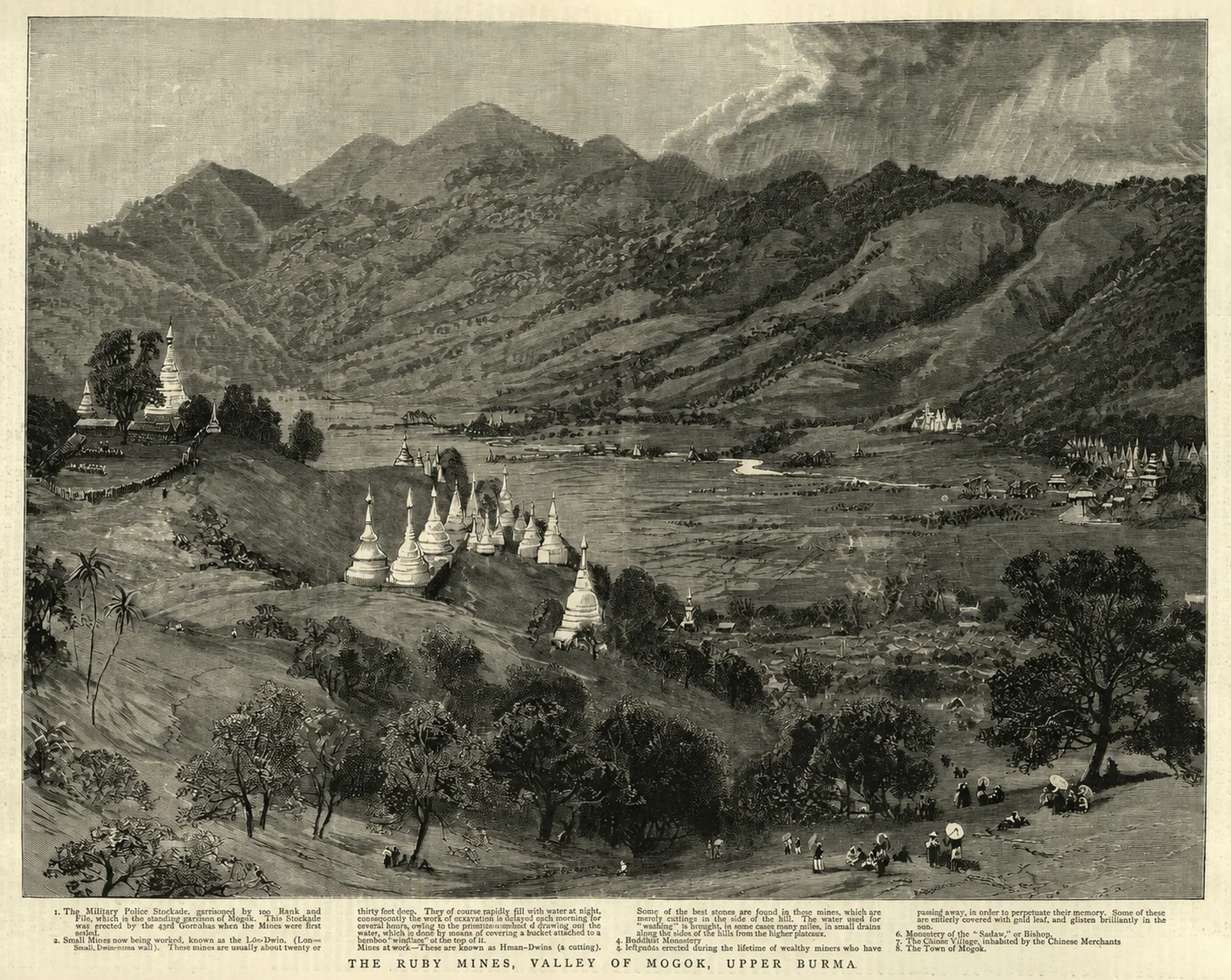
When Britain annexed Upper Burma in 1886, the mines were prize enough to be surveyed within the year; London capital followed, and the valley's stones lit the courts of Europe as they had lit Ava and Amarapura before.
The workings themselves changed less than the flags above them — pits and hillside cuttings, water and patience, much as the nineteenth-century engravings record.
Won by hand, and scarcely won at all
Mogok's rubies form in marble — a chemistry almost free of iron, which is why the finest stones fluoresce as if lit from inside. The same geology makes them vanishingly scarce: for every carat of fine ruby the valley yields, tonnes of rock give nothing.
A clean, unheated Burmese ruby above three carats is among the rarest objects in the gem world — rarer, carat for carat, than any colourless diamond. The finest have set records at auction that no other coloured stone has approached.
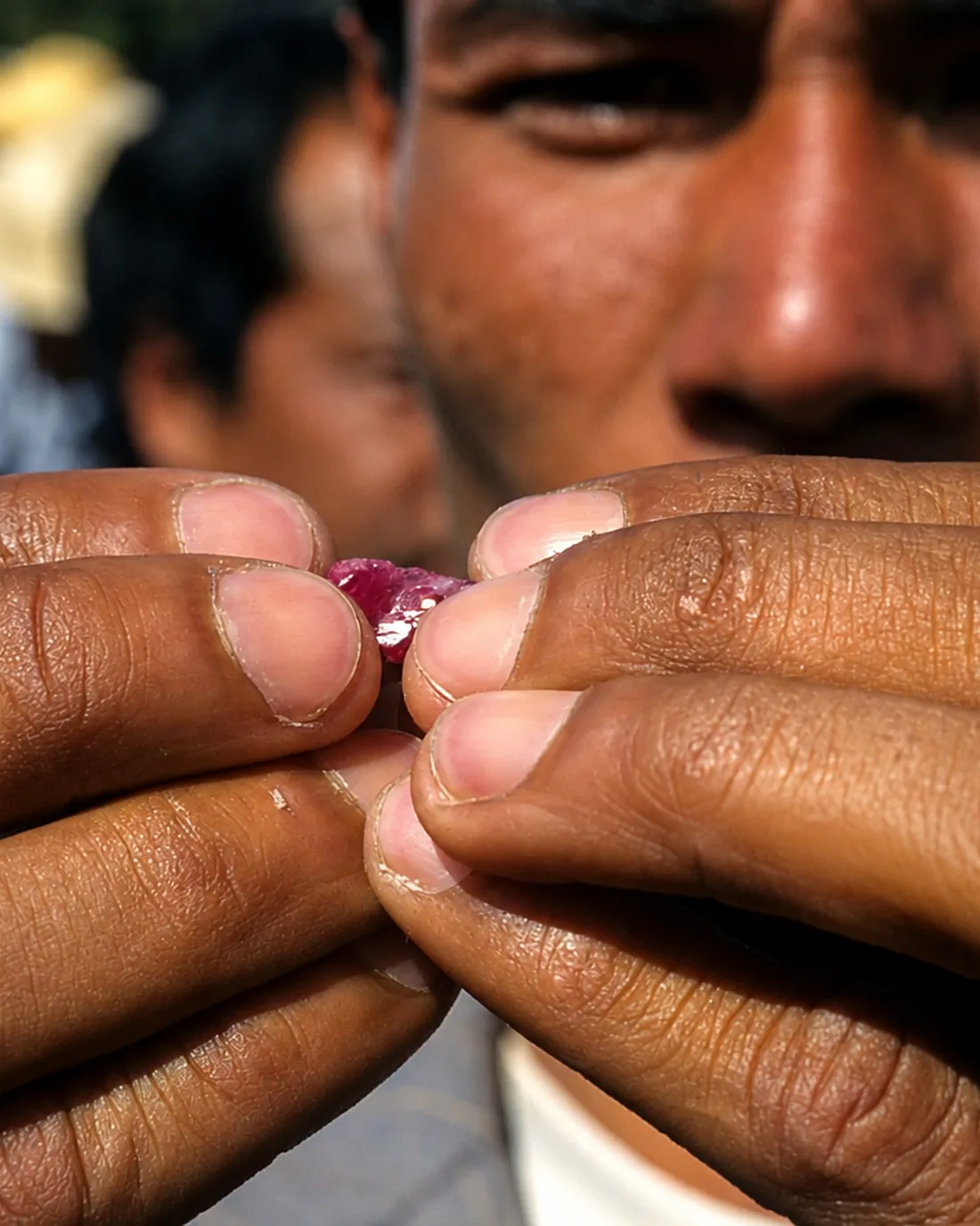
Most are still found the old way: by hand, in gravel, one stone at a time.
Origin, in writing
A Burmese ruby the Maison offers carries its origin on paper — laboratory-certified, treatment stated plainly, the unheated stone named as such.
The valley supplies the legend. The certificate supplies the proof. A commission deserves both.
The valley's stones are few. The conversation costs nothing.
Begin the Conversation